Wednesday, January 16, 2013

22: More Italy and Switzerland, April 1932


View Larger Map

Stopped at Pisa (A) and saw the huge leaning tower and beautiful cathedral April 15th.

Credit: Pisa, March 2026, Evan and Emily Farrer
Cathedral surrounded by scaffolding

Stopped at Genoa (B) and its elaborate Campo Santo cemetery April 16th. Nearly every grave had an elaborate sculpture on it. One a runner clearing the tape at finish.

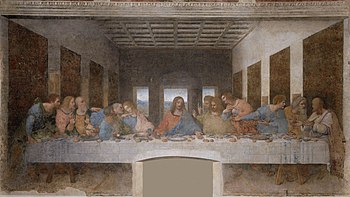
Last Supper, Wikipedia
Saw Milano (C) and its wonderful cathedral with 140 pinnacles each topped by a statue, April 20th. Also visited Leonardo da Vinci’s Last Supper in Santa Maria Delle Grazie church. The famous painting is getting the worse for age and deterioration.

I left April 21 for Lugano (D) in the Italian part of Switzerland. Went on to Lucern (E) in lake country and Interlaken. From here I hiked into a mountainous valley where the snow would slide down occasionally from side mountains in Niagara-like beauty. Fertile mountainside fields were tended by farmers who would scatter liquid effluent caught from their cow barns. It sure made the hay grow fast.

Jungfraujoch, Wikipedia
On April 26, I caught the train for a $9, ride up to the Jungfraujoch (saddle) 22,340 feet high. The hotel there is the highest hotel and up the highest railroad in Europe. The Jungfrau peak is 13, 670 feet high. The train takes long spirals into the core of the mountain, returning to outer edge at one point in each turn where air and light pours in from outside. Trip up took four hours. Plenty of ice and glaciers with many skiers.

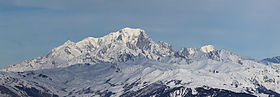
On to Geneva (F) from where we could see Mt. Blanc. We saw the old League of Nations Palace and the monument to the Reformation with some good sculptures of prominent figures.
Mt. Blanc, Wikipedia

Reached Basle (G) April 30th and stopped at mission headquarters. This is near the head of the Rhine River which flows through the city. The Swiss are much more refined to my thinking, and more hospitable. The Italians always had their hands out.

Palace of the League of Nations
Geneva
April 1932

St. Peter's Cathedral
Geneva
On site of heathen temple, commenced in XIth Cent. in time of round-arched Romanesque and finished in XVIIIth Cent. when Gothic reached its height.
April 1932
[Is this correct?  It does not look like other images I find.]

Sunday, January 13, 2013

21: Pompeii, April 1932


View Larger Map

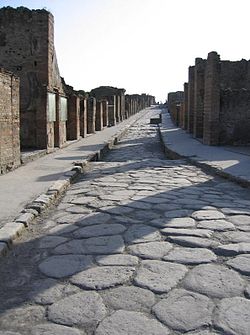
From Naples I visited crater of Mt. Vesuvius and nearby Pompeii. The first time I climbed the cindery cone approached by a hike from a nearby railroad station, the clouds were so heavy that I could not see down into the big crater. So I went again. The second time I could climb down into the floor of the crater which was of hardened lava. Near the center was a very small crater with yellow sulfur around it and steam pouring from it. About ten years later this volcano belched forth a destructive stream of lava and cinders.

The museum showing what was excavated from Pompeii was to me more interesting than the actual ruins. Bodies, implements, jewelry, and even small animals were taken out and now may be seen. I also went by small boat to the Isle of Capri which had vines in full bloom and gorgeous scenery. It was the summer resort of the Caesars. (The vines were Wistaria).

I had received a letter from home telling me that I should arrange to land in New York sufficiently late that Mother and Lucile [sister] could meet me after Lucile had completed her teaching school in early June.


Pompeii
Lawrence Schwarz, Mrs. M. F. Osterlin, Mrs. J. Roth, Dr. M. F. Osterlin.
Anne Arbor for latter; St. Louis, former.
April 1932

Wednesday, January 2, 2013

20: Rome, March - April 1932


View Larger Map
Arrived in Rome evening of March 25.

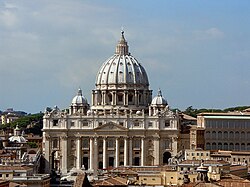
Billions of dollars have been poured out here in the capital city of Catholicism on beautiful buildings, fountains, columns and art work. Much of it is owned directly by the church whose head resides in the tiny area of the Vatican (A). The basilica San Pietro (B) with dome designed by Michelangelo is so impressive on outside but so barnlike on the inside that it leaves much to be desired. Huge round arched passages with beautiful side chapels and sculpture work. The Swiss guards with striped uniforms and halberds (spears) are prominent.

Basilica San Pietro
Source:  Wikipedia

Inside St. Peter's Basilica, March 2026. Not barnlike now.
Credit: Emily Farrer

The Pieta, St. Peter's Basilica, March 2026
Credit: Emily Farrer

Guard at the Vatican, March 2026
Credit: Emily Farrer

I wrangled an audience with the Pope by going to the American College (for clergy) and telling them that I was interested (I didn’t say how) in their church, and showing them my passport.

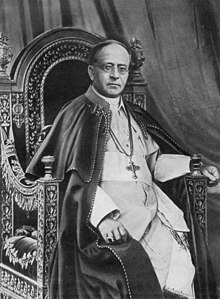
It took about an hour and a half to go into the inner palace and past many groups of soldiers in elaborate uniforms (more elaborate than any I have seen) to the hall where the Pope finally appeared. We were all around a huge ellipse down on one knee. All women dressed in black, with veil over heads. The Pope passed down the line extending his hand so the person could kiss his ring. He was a rotund, sallow, bespectacled man. I pressed his hand to my chin.

Pope Pius XI, the Pope in 1932
Source:  Wikipedia

I also went to the Scala Santa (C) (holy stairs) in the Lateran complex. This is the co-cathedral of Rome. There are 28 marble steps worn badly and covered with wood. These supposedly were brought from the house of Pontius Pilate in Jerusalem by St. Helena in 326. According to a notice the Pope grants a perpetual indulgence to souls in purgatory for one person crawling up the staircase on knees and saying a prayer on each and then in the chapel at the top. It was up these steps that Martin Luther is recorded as having decided to renounce Rome. He was then a Catholic monk.

Cloisters, The Lateran
(San Giovanni Laterno)
Rome
April, 1932

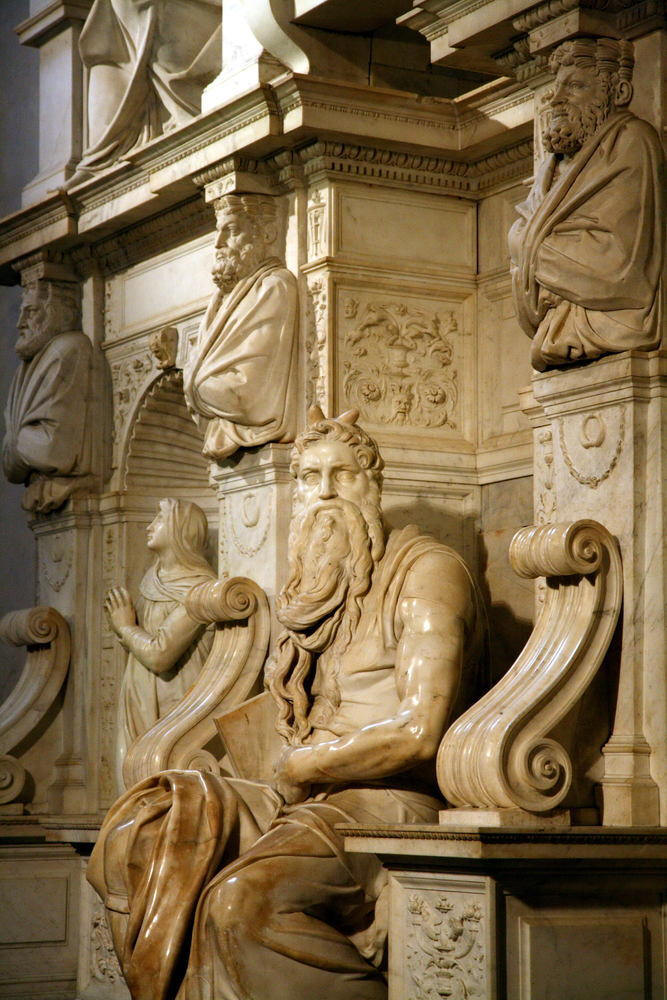
Also saw Colosseum (D), which has been considerably rebuilt as indicated by old paintings in art galleries which I saw, a little of the catacombs, the Church of San Pietro in Vincoli (H) with its striking statue by Michelangelo of the horned Moses, and the Capuchin Monastery where bones of dead monks are seen in basement clothed in their habits. They were dug out when the site of the monastery was moved.

Colosseum
Begun by Vespasian
Inaugurated by Titus, A. D. 80
With spectacles lasting 100 days during which more than 5,000 wile beasts were slain.
Elliptical three rows would seat 50,000 people.
March 1932

Colosseum, March 2026, Evan and Emily Farrer

Arch of Constantine & Colosseum (E)
Rome
March 1932

Arch of Constantine, March 2026, Evan and Emily Farrer

The horned Moses in the Church of San Pietro in Vincoli
Source: Best Tourism

Roman Forum
Arch of Septimus Severus (F)
203 A.D.
Basilica Julia
February [probably meant March/April] 1932

Roman Forum
Arch of Titus in distance.  Temple of Antonius, Pius, and Faustina (G)
February [probably meant March/April] 1932

Roman Forum, March 2026, Evan and Emily Farrer

Roman Forum, March 2026, Evan and Emily Farrer

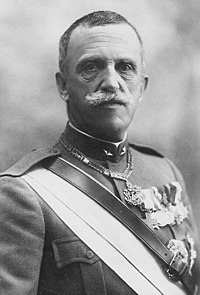
I did see King Victor Emmanuel who was getting old, but never saw Mussolini, who was then in power. Trains were running more or less on time, but there were lots of poor people.
King Victor Emmanuel
Source: Wikipedia

I went to San Pietro’s on Easter Sunday, amidst several hundred thousands of people. You had to stand up inside the basilica. The big pipe organ sounded like a little tinny toy. I detected no spirituality.


Castel Sant' Angelo (I)
(Tomb of Hadrian)
Incorporated in City Walls. Besieged many times. Now a museum, largely of weapons.
Rome
April 1932


Castel St Angelo, March 2026, Evan and Emily Farrer

Sunday, December 9, 2012

19: Florence, March 1932


View Larger Map
Arrived in Florence (A), Italian Firenze, afternoon of March 21st. Beautiful old palaces and art galleries and black and white marble cathedral, with Piazza del Duomo in front. Michelangelo’s statue of David prominent in another square.

Campanile and dome of the Duomo (Cathedral)
Florence
Campanile is from design by Giotto and was begun in 1334.  276 ft. high.
March 1932 

Florence Cathedral and Bell Tower, March 2026
Credit: Evan and Emily Farrer

David, now inside the Accademia Museum, is truly stunning
Credit: Evan and Emily Farrer, March 2026

Church of Santa Croce
(from 13th to mid 15th Centuries)
Florence
Contains tombs of Michelangolo [sic], Galileo, Rossini, et al. 

Church of Santa Croce exterior, March 2026
We were on an e-bike tour and unable to go inside. I showed the tour guide Fawz's interior picture, and he said that was one of the best he had ever seen because there was flooding some time after Fawz took his picture which caused damage.
Credit: Emily Farrer

Portion of wing of Pitti Palace. Boboli Gardens, and tower of Palazzo Vecchio.
Florence
March 1932 

An street-side wing of the Pitti Palace while on our e-bike tour, March 2026
Credit: Evan and Emily Farrer
Same tower that Fawz saw, but from the perspective at Michelangelo Point, March 2026
Credit: Emily Farrer

In Boboli Gardens
Pitti Palazzo
Florence
March 1932

In courtyard of Palazzo Ricardi, one of old homes of Medici family, now partly public offices, 
partly museum.
Florence.
March 1932

Entrance to Palazzo Ricardi, but the courtyard where Fawz went is inaccessible to the public now.
Credit: Evan Farrer, March 2026

Sunday, December 2, 2012

18: Greece and Venice, March 1932


View Larger Map

We saw lots of porpoises in the Sea of Marmora (A) going out. They were very beautiful and playful. Arrived at Piraeus, Greece, (B) morning of March 14 and caught a taxi five miles to Athens (C) and the Acropolis. Beautiful hill and real architecture. Saw large groups of the "Ladies from Hell," elite Greek soldiers who wear kilts and shoes with pointed toes which curve upward. Sailed through Corinth Canal  (D) which is cut through stone isthmus near ancient city of Corinth. Ship has only a few feet clearance on each side from stone banks.

Ship next steamed into Adriatic Sea and north to Venice (E). Italian police and soldiers are picturesque. Some wear Napoleon-like hats, others with Robin Hood hats with feather and cloaks. We passed many sailing ships in Adriatic which on March 16th was fairly cool, misty and cloudy.

We see several leaning towers as we pulled into the dock at Venice. Went to nearby Pension Seguso and to the San Marco nearby. This is great cathedral erected supposedly over the bones of St. Mark, their patron saint who died in Alexandria, Egypt, but who had been promised by an angel that his bones would rest in Venice. The body was smuggled out of Alexandria under pork carcases and taken to Venice. The basilica seems all domes and gilt with a number of fine mosaics in beautiful colors and showing fine scenes in the arches below.

Piazza San Marco
Church and Companile.
Present building completed 1094.  First Ducal chapel on this site finished about 832.  St. Mark's remains brought to Venice in 828.
Venice
March 1932 

Sadly, I failed to get the same angle that Fawz had, but this is St. Mark's Campanile that we got to go up in (it was very cold), March 2026. Credit: Emily Farrer

St. Mark's Basilica, March 2026
Credit: Evan Farrer

Next east is the Doge's Palace, a beautiful structure with many huge beautiful historic paintings inside. Above the central arch of the San Marco, by the way, are four bronze horses taken as booty by Venetians when they captured Byzantium (Istanbul). I was in Venice for Palm Sunday, a great religious day for Catholics. Huge crowds poured out of the cathedral, each person carrying a small sprig resembling palms. Saw many fine museums and art galleries. I liked particularly the paintings of Tintoretto. To get very far in Venice you catch a motor boat. Gondolas were slow and expensive. Venice is on 100 islands separated by almost 150 canals crossed by about 380 bridges. Adjoining the San Marco, by the way is a high bell tower with a winged lion atop.

Doge Palace, March 2026
Credit: Emily Farrer


On Grand Canal
Venice
Taken from Gondola
March 1932

On Grand Canal Gondola, March 2026
Credit: Emily Farrer
Friday, November 30, 2012

17: Island of Rhodes, Roman Ruins, and Turkey, March 1932


View Larger Map

March 7 landed at Beirut,  Lebanon (A). Mountainous in interior, some were snow capped.

 
 March 1932
Island of Rhodes

Island of Rhodes
Fileremo, formerly the Acropolis of Ialysus
March 1932

Stopped at Island of Rhodes (B) March 9. Rocky, Saw some Roman ruins. Beautiful scenery. Sail into the Dardanelles straits (C) and see some of the old stone forts still there, through the Sea of Marmora (D), which is so big you see no land and though the Bosporus to Istanbul. Saw Mosque of Sancta Sophia, erected originally by the Emperor Constantine, reconstructed by Theodosius and finally by Justinian in about 538 A.D. It has a gigantic dome with flying buttresses and a number of auxiliary domes, semi-domes and interior round arches. It is an impressive sight inside. I set my camera for time exposure and had the picture when a Mohammedan priest told me no pictures were allowed inside [see interior below]. I was so flustered that I later took a second exposure over the same film.

Mosque of St. Sophia
Istanbul
March 1932


The modern Turks wear clothing similar to ours, use the same alphabet and letters we use and the women no longer wear veils as we had seen in Egypt and Palestine.