Showing posts with label funny. Show all posts

Wednesday, January 2, 2013

20: Rome, March - April 1932


View Larger Map
Arrived in Rome evening of March 25.

Billions of dollars have been poured out here in the capital city of Catholicism on beautiful buildings, fountains, columns and art work. Much of it is owned directly by the church whose head resides in the tiny area of the Vatican (A). The basilica San Pietro (B) with dome designed by Michelangelo is so impressive on outside but so barnlike on the inside that it leaves much to be desired. Huge round arched passages with beautiful side chapels and sculpture work. The Swiss guards with striped uniforms and halberds (spears) are prominent.
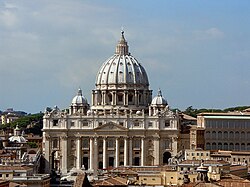
Basilica San Pietro
Source:  Wikipedia

Inside St. Peter's Basilica, March 2026. Not barnlike now.
Credit: Emily Farrer

The Pieta, St. Peter's Basilica, March 2026
Credit: Emily Farrer

Guard at the Vatican, March 2026
Credit: Emily Farrer

I wrangled an audience with the Pope by going to the American College (for clergy) and telling them that I was interested (I didn’t say how) in their church, and showing them my passport.

It took about an hour and a half to go into the inner palace and past many groups of soldiers in elaborate uniforms (more elaborate than any I have seen) to the hall where the Pope finally appeared. We were all around a huge ellipse down on one knee. All women dressed in black, with veil over heads. The Pope passed down the line extending his hand so the person could kiss his ring. He was a rotund, sallow, bespectacled man. I pressed his hand to my chin.
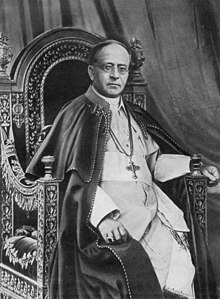
Pope Pius XI, the Pope in 1932
Source:  Wikipedia

I also went to the Scala Santa (C) (holy stairs) in the Lateran complex. This is the co-cathedral of Rome. There are 28 marble steps worn badly and covered with wood. These supposedly were brought from the house of Pontius Pilate in Jerusalem by St. Helena in 326. According to a notice the Pope grants a perpetual indulgence to souls in purgatory for one person crawling up the staircase on knees and saying a prayer on each and then in the chapel at the top. It was up these steps that Martin Luther is recorded as having decided to renounce Rome. He was then a Catholic monk.

Cloisters, The Lateran
(San Giovanni Laterno)
Rome
April, 1932

Also saw Colosseum (D), which has been considerably rebuilt as indicated by old paintings in art galleries which I saw, a little of the catacombs, the Church of San Pietro in Vincoli (H) with its striking statue by Michelangelo of the horned Moses, and the Capuchin Monastery where bones of dead monks are seen in basement clothed in their habits. They were dug out when the site of the monastery was moved.

Colosseum
Begun by Vespasian
Inaugurated by Titus, A. D. 80
With spectacles lasting 100 days during which more than 5,000 wile beasts were slain.
Elliptical three rows would seat 50,000 people.
March 1932

Colosseum, March 2026, Evan and Emily Farrer

Arch of Constantine & Colosseum (E)
Rome
March 1932

Arch of Constantine, March 2026, Evan and Emily Farrer
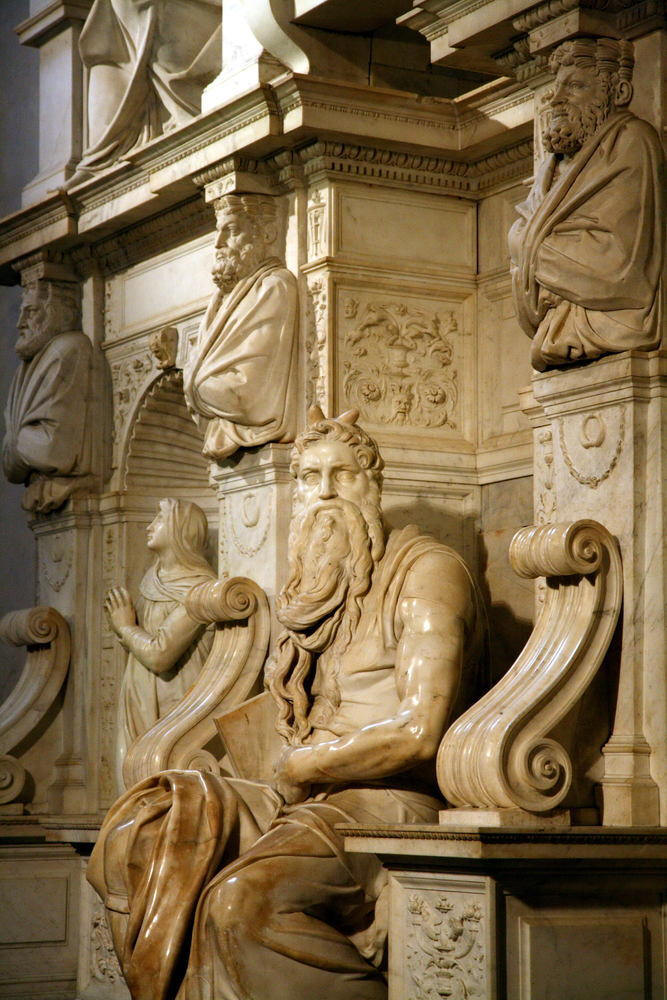
The horned Moses in the Church of San Pietro in Vincoli
Source: Best Tourism

Roman Forum
Arch of Septimus Severus (F)
203 A.D.
Basilica Julia
February [probably meant March/April] 1932

Roman Forum
Arch of Titus in distance.  Temple of Antonius, Pius, and Faustina (G)
February [probably meant March/April] 1932

Roman Forum, March 2026, Evan and Emily Farrer

Roman Forum, March 2026, Evan and Emily Farrer
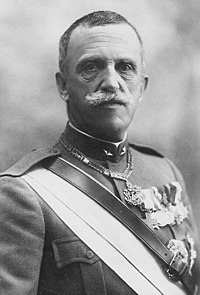
I did see King Victor Emmanuel who was getting old, but never saw Mussolini, who was then in power. Trains were running more or less on time, but there were lots of poor people.
King Victor Emmanuel
Source: Wikipedia

I went to San Pietro’s on Easter Sunday, amidst several hundred thousands of people. You had to stand up inside the basilica. The big pipe organ sounded like a little tinny toy. I detected no spirituality.


Castel Sant' Angelo (I)
(Tomb of Hadrian)
Incorporated in City Walls. Besieged many times. Now a museum, largely of weapons.
Rome
April 1932


Castel St Angelo, March 2026, Evan and Emily Farrer

Sunday, November 11, 2012

13: January 1932, Mozambique


View Larger Map

I caught the train at 4 a.m. from Nelspruit for Lorenco Marques, Portugese East Africa. The Portuguese were much more harsh toward the natives than were the English or the Dutch. Some beautiful hotels and other buildings there. Loaded aboard the ship were many tones of black mineral, apparently manganese, and many bags of corn meal, both brought by rail from the interior. Native labor sung and chanted with gusto loading the bags onto nets lifted into the ship’s hold.

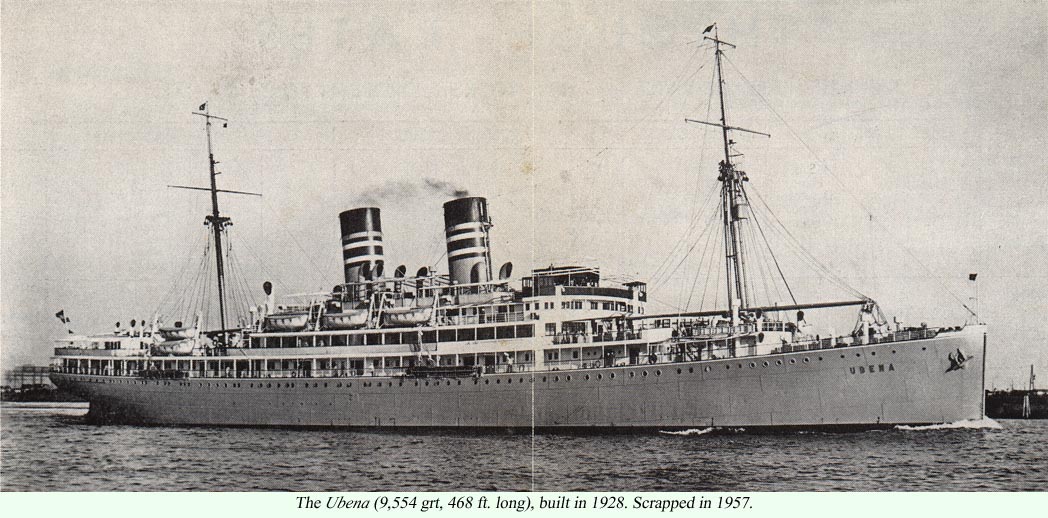
It was a beautiful German East Africa Line ship, the “Ubena.” In the same third class cabin with me was a Church of England monk (celibate), Reverend Winters, who had been working with natives near Nelspruit. Also in my cabin were two old heavy men, one with Masonic charms headed for Port Said and the other from Durban headed for England. Weather warm and no baths because water too muddy, stewards informed us.


General Hertzog, head of South African government, announced that the country was leaving the gold standard, following the lead of Great Britain. Fortunately I had invested most of my available funds in gold one-pound coins obtained from a Brother Muir who worked in a bank in Johannesburg. This gold therefore commanded a premium. South Africa also announced an increase in its subsidies for exports: wool from 10 to 25 percent; mohair from 10 to 25 percent; fresh fruit from 15 to 20 percent and fresh and frozen meat from 10 to 20 percent.

We sailed from Lorenco Marques January 26th after lengthy loading of freight.

I was up at 6 a.m. next morning exercising and then bathing. Steward called us in turn when bath was ready by signed up schedule. Bath water was warm sea water. One morning he came in to call Rev. Winters to his bath, Winters was kneeling in his bed praying. The steward whacked him on the bottom, saying, “Bad! Bad!” German for “bath! Bath!” The rest of us in the cabin were chuckling. On the voyage up the east coast of Africa I would follow the same routine; early rising, exercise, bath, breakfast, reading scriptures, and whatever was available - playing deck tennis, quoits, table tennis, checkers, or going ashore where possible.

On January 28th, we pulled into the port of Beira, also under the Portuguese, in mouth of two rivers both navigable. Great bars of copper bound for Belgium were among the freight loaded using booms (ships’ derricks) and lighter boats. Other freight loaded: sisal, asbestos in big bags, and copra. Crocodiles are in the rivers, we were told.


Sixteenth Century Fortress of stone imported from Portugal
in small boats of that period and some coral rock.
The only place never captured from the Portuguese in East Africa.
Mozambique
January 31, 1932


On January 31st pulled to anchor off Mozambique, on a coral island about a mile and half off the north coast of Portuguese East Africa visited by Vasco De Gama in 1498. Walked into town, saw castle and prison which was extremely hot. Native section very closely built, thatched roofs, walls of bamboo fastened together with cross pieces and plastered over with stoney mixture.

Sunday, November 4, 2012

06: Robertson to Durban, 1930


View Larger Map
Next Monday morning doors were slammed in our faces. We found Dutch Reformed Church clergy were walking down the streets ahead of us and warning the people to beware of us.

Brother Herbst was told that Reverend Snyman had preached a hell-raiser against us in his beautiful church Sunday. He had told them that we were trying to kidnap their daughters.

So we left Robertson (A) for the homeward trip. We spent the first night at the Visser cottage where we were welcomed heartily. We were able to catch a lift on a pickup truck over steep Bain’s Kloof (B). We spent the next night in the home of the foster parents of Brothers Alvin and Walter Park at Stikland (C), and reached Mowbray (D) that evening.

Perhaps church members at a church function?  Women with banners.

Back of picture reads:
Dolly Green, Minnie Fouche, Nellie Fouche, Nellie Bolleurs (VIRTUE?), Maud Grotique (LOVE), Myrtle Clark, Dolly Bolleurs, Sr. Fouche (MOTHERHOOD), Lily Clark, Sr. Brummer, Mrs. Green
April 1930 or soon after

The Visser boys wrote to me regularly. They wanted an air rifle so I sent them a good pellet gun.

Soon after, President Dalton assigned me to open up the Durban District again. There were only about 14 missionaries in South Africa and less than 1,000 members.

I rode with him by railway to Port Elizabeth (E) where we stayed a day or two. Here I met Elder Clare B. Christensen of American Fork, whose sister I later met and married. Here the wind only blew once a year - all the time!

We also stopped at East London (F). Natives would come out to sell fruit and to beg at each train stop. One day President Dalton was catching up on his journal and asked to borrow mine to help fill in. I replied, “If you can stand it I can!”


One night at Mowbray (G) he had decided to give the ten minute talk on church history requested by the General Authorities. I recorded in my journal: “President Dalton gives one hour and 50 minute harangue on church history for ten minute talk scheduled.” Years later I noticed an addition written in the margin: “President Widtsoe (London, European Mission), says ‘Do not curb the spirit.’ I wish you would remember this, Elder Barker.”


Elder A. Kay Berry
recovering from a burn
Durban - 74 Cromwell Rd.
June 1930


I caught a British Union Castle ship (a beauty) from East London to Durban (H). I rented a room in the Berea district at a place on Cromwell Road that had huge avocado trees in the front yard. Elder A. Kay Berry joined me soon. I met a George Canning and was able to baptize him later. Durban was terribly hot in the summer, with no air conditioning. In those days each elder tracted separately, usually across the street from his companion, so we could get to more places. We had no prepared lesson system. We baptized a Knicklebein family.


Start of the July Handicap
Durban
July 1930


266 Frere Rd.
Durban, Natal
George C. Canning
Durban Beach
Dec. 1930


I would rewrite the newsletters and mail them back to Mowbray for Cumorah’s Southern Cross.

Saturday, November 3, 2012

03: Australia to South Africa

In early June I boarded the "Themistocles," an Aberdeen-White Star British freighter, about twice as big as the “Lurline,” which burned coal rather than the oil used to power the “Lurline.”


Image:  Google Images

The ship stopped at Melbourne (A) and Adelaide (B), at each of which places I went inland to visit with the elders and see the small branch chapels. Then we headed across the great Australian Bight through some very rough seas to Perth (C).

I had many gospel conversations with Australian and British passengers, but made no converts. I read B. H. Roberts New Witnesses for God, and Joseph F. Smith’s Gospel Doctrine.

Crossing the Indian Ocean again we had some very rough weather, so rough that they had to put up guard rails on the tables to prevent the plates from sliding off. We evidently had some kind of radio beacon because the ship headed right into Durban (D) harbor through pouring rain and heavy clouds. No sun had shone for several days.

After clearing customs I was greeted by a blue uniformed fellow who said he had come to arrest me. It was a put-up job, however, since he told me he was a Mormon, Henry J. Trestrail. Elder Bertram J. Cutforth from Moreland, Idaho also met me.


View Larger Map

04: In South Africa


View Larger Map I was astonished at the thousands of natives dressed in castoff clothing and even gunny sacks. They heaved the coal and did the dock work. Ashore there were gaudily dressed native rickshaw boys, some with great horns on headdresses. The latter were for posing for photographs.

I stayed overnight and tracted the next morning, working with Elder Rex C. Ellsworth, from Safford, Arizona, who later owned the racehorse "Swaps" which won a big prize. Elder Evan P. Wright, then back in Utah, sent Rex a wire offering him a get rich quick scheme selling brassieres to the natives of South Africa.

Durban has a beautiful beach, natural harbor and beautiful green hills, called the Berea area, above the flatlands. It also had a big native market where you could buy bananas for less than 12 cents a dozen, and a large East Indian section. Mahatma Ghandi was born in Durban.

There were electric two-decker tramways. Once when I later labored in Durban, Elder A. Kay Berry and I rode the tram and inadvertently left our two tennis rackets in the car. They were held by the tram company until we picked them up. Youngsters in South Africa received very British education and were honest. No European would smoke a pipe, because the natives smoked pipes.

Left to Right: Clarence, Elder Thomas Y. Wilson, Pres. Don Mack Dalton, George Maus

I next went by the same ship around Cape of Good Hope to Capetown, mission headquarters. President Don Mack Dalton (he was a lawyer with a wife and two sons they adopted) had me labor at mission headquarters several months. I was commissarion and news editor of Cumorah’s Southern Cross. I rewrote the news letters sent in by each district and wrote other copy for the monthly.

President Dalton was strong on selling Books of Mormon. One Elder, Wells L. Evans, from Bountiful, was a high power salesman for first contact, but not much good on follow-ups. He made lecture tours of the mission showing lantern slides and lecturing on Book of Mormon archaeology. He used S.O.A. after his named (student of archaeology). Once he sold Books of Mormon at 50 cents a piece to about 15 nuns following his lecture at a convent. They did not know the title of the book they were burying. I mailed the books to the convent from Mowbray. Elder Evans later married in South Africa dn did not win an honorable release.

I made a three week trip by bicycle without purse or script with Elder Kenneth Sutherland, a little Scotsman who had qualified as an engraver in Aberdeen, and come to Capetown, to Robertson.

Our first night about 20 miles outside Capetown, we spent with a man and his East Indian wife, who was very hospitable.

The next night was at Wellington, a beautiful town in a rich fruit growing area along the Berg River. It was not far from Paarl (Pearl) named from a huge granite hill around which the hane poot grapes grew in great profusion. We did not have a bit of luck finding anyone who would let us stay with them overnight until about 11:15 p.m. when a hospitable woman with a native servant invited us to sleep on cots on her front porch. We were delighted.

On top of Table Mountain
January 1930 
Cape Town

Table Mountain: Wikipedia

Devil's Peak
from dormitory window, "Cumorah",
Cape Town
January 1931

Devil's Peak: Wikipedia


The Paarl Rock (granite)
Paarl, C.P.
Elder Kenneth Sutherland & push bikes
January 1930

Paarl: Wikipedia